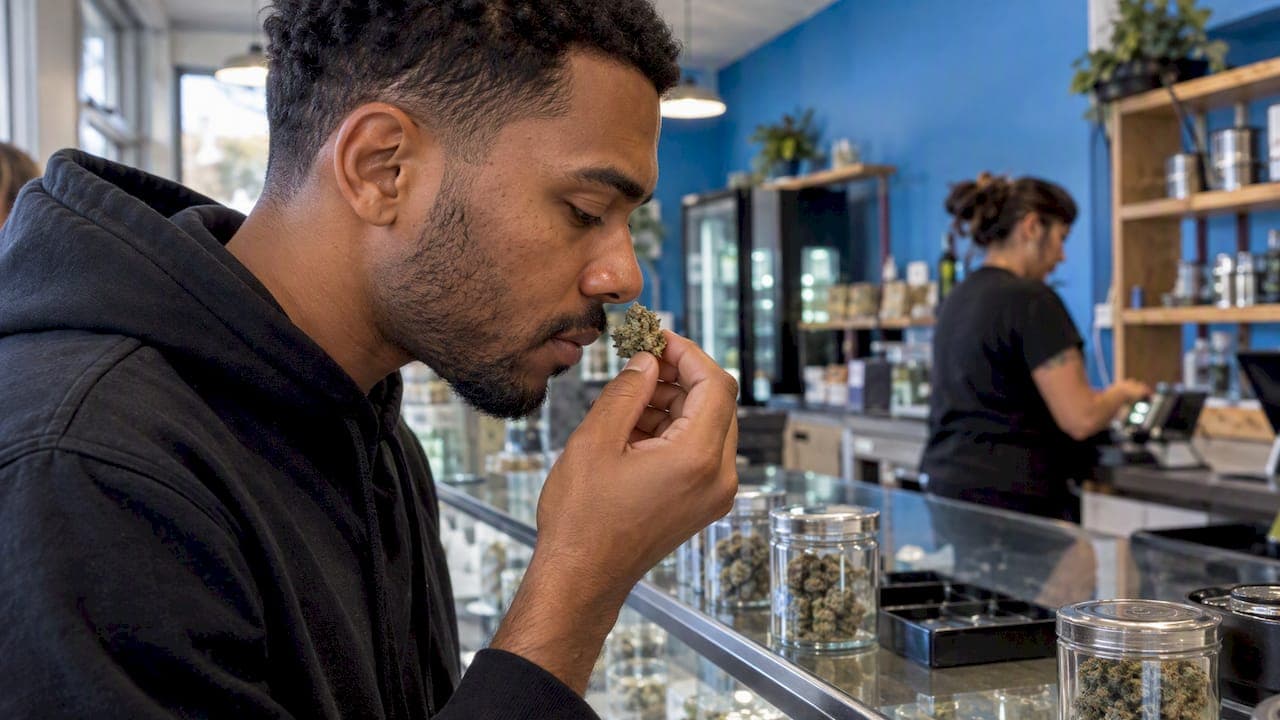
A terpene profile is the fingerprint of aromatic compounds in a cannabis flower: which terpenes are present, and in what proportions. It is the reason one jar smells like citrus peel and another like pine and pepper. This guide covers the terpenes you will see on a chart, how to read them on a lab report, what counts as "high," and what science does and does not say about their effects.
TL;DR
- A terpene profile lists the aromatic compounds in a flower and their relative amounts. It drives aroma and flavor, and the mix differs from batch to batch, not just from strain to strain.
- The common terpenes on a chart are myrcene, limonene, pinene, linalool, caryophyllene and terpinolene. Each has a typical scent: earthy, citrus, pine, floral, peppery, herbal.
- "Indica," "sativa" and "hybrid" labels do not reliably predict terpene content. The batch lab report does.
- There is no universal benchmark for "high" terpene content. Look at the total, the top three terpenes, and how the flower was grown, dried and stored.
- Human evidence on terpene effects is still thin. Buy for flavor and aroma first.
Table of Contents
- What a terpene profile actually is
- Terpene chart: common cannabis terpenes, aromas and flavors
- How terpene profiles shape flavor, aroma and strain diversity
- How to read terpene results on a lab report
- What counts as high terpene content?
- What science says about terpenes and effects
- Our perspective: terpenes are a quality signal
- Find a profile you'll like
- Tips for choosing by terpene profile
- FAQ
- Sources
What a terpene profile actually is
Terpenes are the volatile aromatic molecules that plants make. In cannabis, they sit in the same resin glands as the cannabinoids and give each flower its smell. A terpene profile is the full list for one sample: the individual terpenes found, and how much of each.
Two things matter more than any single name on that list:
- The dominant terpenes. Usually one to three compounds make up most of the total, and they set the character of the flower.
- The supporting cast. Trace terpenes often add the notes you cannot quite name, like a hint of flowers behind the citrus.
Terpenes also fall into two families. According to Cannabis Business Times, monoterpenes such as myrcene, limonene and pinene are smaller and more volatile, while sesquiterpenes such as caryophyllene and humulene are generally less volatile and more stable. In practice, that means the bright top notes are the first to fade when flower is dried too hot, handled roughly or stored badly.
Terpene chart: common cannabis terpenes, aromas and flavors
A 2025 academic review of cannabis aroma and flavor names myrcene, limonene, α-pinene, linalool, β-caryophyllene and terpinolene among the common terpenes, and ties them to descriptors such as earthy and fruity for myrcene, citrus for limonene, and peppery and woody for caryophyllene. Here is a working chart built on that foundation, with the other descriptors being the ones most commonly used in the industry.
| Terpene | Family | Typical aroma and flavor | What it tastes like in the jar |
|---|---|---|---|
| Myrcene | Monoterpene | Earthy, fruity | Ripe mango, musk, damp herbs |
| Limonene | Monoterpene | Citrus | Lemon zest, orange peel, sweet candy |
| α-Pinene | Monoterpene | Pine | Fresh needles, resin, forest air |
| Linalool | Monoterpene | Floral | Lavender, soft sweetness |
| β-Caryophyllene | Sesquiterpene | Peppery, woody | Black pepper, clove, warm spice |
| Terpinolene | Monoterpene | Floral, herbal, citrus | Bright, slightly bitter, green |
| Humulene | Sesquiterpene | Woody, earthy | Dry hops, bark |
Terpenes for flavor chasers
If you buy flower mainly for taste, read the chart as a map of flavor families:
- Sweet and bright: limonene-forward flower tends toward citrus candy and zest.
- Sweet and soft: linalool and myrcene combinations lean floral and fruity.
- Savory and spicy: caryophyllene-dominant jars smell of pepper and warm spice.
- Green and herbal: terpinolene gives a lively, slightly bitter, herbal-floral character. The same academic review describes it as a monoterpene with a floral, herbal and citrus aroma and a mild, slightly bitter flavor.
- Fresh and sharp: pinene brings forest and resin notes.
Most jars blend several of these. A flower that reads "limonene, caryophyllene, linalool" will smell like sweet citrus over pepper with a floral finish, which is a very different experience from a myrcene-heavy jar, even if both carry the same strain name.
For a deeper look at how this works in hemp flower specifically, see our guide to hemp flower terpenes.
How terpene profiles shape flavor, aroma and strain diversity
Strain names are a convenient shorthand, but terpene chemistry is what you actually smell and taste. Because the compounds combine in different ratios, even a few terpenes can produce a huge range of aromas. That is why the cannabis shelf feels so varied, and why enthusiasts talk about strains the way wine drinkers talk about grapes.
It also explains why sorting cannabis into neat groups is hard. Robert C. Clarke and Mojave Richmond, writing in Cannabis Business Times, point out that terpenes have long been valued for fragrance and flavor, yet assigning cultivars to discrete groups by terpene content remains challenging because these volatile blends are so complex.
Indica, sativa and hybrid labels
The labels on the shelf are a weak guide. A University of Colorado Boulder report on a 2022 study found that the commercial indica, sativa and hybrid labeling schemes do not consistently line up with distinct terpene compositions. If you want to know what is in the jar, the terpene numbers say more than the label. We cover this in more detail in Indica vs. Sativa: What the Labels Really Tell You.
Why two jars of the same strain can smell different
Terpene content is not fixed by genetics alone. Several things change what ends up in the jar:
- Growing conditions. Light, soil, nutrition and environment all shape what the plant produces. See Indoor vs Outdoor Weed: What Actually Changes in the Jar.
- Drying and curing. Volatile monoterpenes escape quickly with heat and airflow.
- Storage. Light, oxygen and time degrade aroma.
- Growth regulators. We grow without plant growth regulators (PGRs) precisely because we want each strain's authentic terpene profile to come through.
The practical lesson: compare batches, not just strain names. A strain you loved last spring may read differently on this year's report.
How to read terpene results on a lab report
A lab report, or certificate of analysis (COA), is the only way to see a profile in numbers. Most reports have a terpene panel that lists each compound found, its amount (usually a percentage of weight or milligrams per gram) and often a total. Here is how to approach one:
- Check that the report matches your batch. Look for the batch or lot number on the report and on the package.
- Find the total terpenes. This gives a rough sense of how aromatic the flower is.
- Read the top three. These are the compounds that define the aroma. Compare them with the chart above to predict how the flower will smell.
- Look at the minor terpenes. A long list of small amounts suggests a more layered profile.
- Note the lab, the date and the test method. Reports are snapshots, and different methods give different pictures.
For step-by-step walkthroughs, we have written a guide to reading a terpene test report and another on what cannabinoid and terpene test panels tell you. If you are buying hemp flower, our hemp COA consumer guide covers the rest of the page, including cannabinoid totals, and our piece on Delta-9 THC and total THC explains why two THC numbers can differ.
Why lab methods change the profile
Two labs can test the same flower and report slightly different terpene profiles. Standard operating procedures published by researchers at the U.S. Department of Energy's OSTI stress that the choice of method, for example headspace sampling versus solvent extraction, significantly affects the resulting profile, and that some methods better reflect the aroma a consumer actually perceives. The same document notes that routine analysis can misidentify terpene enantiomers, such as (+)-limonene versus (-)-limonene, unless chiral analysis is used.
What this means for you: treat terpene percentages as a reliable comparison within one lab's reports, and be cautious about comparing exact figures across different labs. Your nose is the final test.
What counts as high terpene content?
There is no single number that means "high" everywhere. The answer depends on the product, the lab and the state.
- Some states set limits. New York's adult-use testing rules say that vaporized or inhaled products cannot exceed 10% total terpenes, with a variance that brings the ceiling to 11.5%.
- Some states restrict reporting. Ohio's Division of Cannabis Control guidance says reporting calculated results, including "Total Terpenes," is prohibited at this time.
So a report that shows a total in one state may legitimately not show it in another. Rather than chasing a percentage, use a simple approach: compare similar flower tested by the same lab, and judge the jar by smell when you open it. A strong, distinct, layered aroma tells you more than a single digit.
What science says about terpenes and effects
This is the part where claims run ahead of evidence, so here is the careful version.
A 2025 review of cannabis terpenes in chronic pain syndromes, published as a PDF by Realm of Caring, concludes that preclinical findings are promising but that clinical translation is limited by methodological variability, a lack of standardized formulations and insufficient pharmacokinetic characterization. Most of the evidence comes from preclinical work, and human clinical evidence remains limited.
The "entourage effect," the idea that terpenes and cannabinoids work better together, is popular, but a 2024 comprehensive review by Rebeca André and colleagues notes that practical application is hindered by variability in secondary metabolites and the limited analytical scope of current products.
What that means for a shopper: terpenes are a dependable guide to smell and taste, and an interesting but unproven guide to how a flower feels. If you have a medical condition, or take medication, talk to your doctor before using cannabis for symptom relief. Do not rely on a terpene chart for that.

Our perspective: terpenes are a quality signal
We look at terpene profiles as a signal of how well a flower was grown and handled, not as a promise about effects. A vivid, layered aroma suggests the plant was grown well and the flower was dried, cured and stored with care. A flat or grassy jar suggests something went wrong along the way.

That is why we control the growing process from seed to sale. Our flower is grown indoors in living soil without plant growth regulators, because we want each strain to show its own terpene profile rather than a muted or distorted one. Every batch is lab-verified, and we publish batch COAs so you can check the terpene numbers yourself instead of taking our word for them. We then pack the flower in engineered packaging designed to keep that aroma fresh.
Our advice is simple: ignore the hype about which terpene does what, buy the profile you enjoy smelling, and ask for the report.
— Cali Farms
Find a profile you'll like
If you want to taste the difference a clean grow makes, start with our Cali Farms Flower Collection. Each batch comes with lab results, so you can match what you read on the report to what you smell in the jar. A few places to begin:
- Wedding Cake for readers who like sweet, rich aromas.
- Bolo Runtz for a fruit-forward profile.
- Trop Cherry for a tropical, candy-like direction.
Retailers and distributors can also ask about wholesale, with the same batch testing behind every order.

Tips for choosing by terpene profile
- Start with the flavors you like. If you love citrus, look for limonene near the top of the report. If you like spice, look for caryophyllene.
- Smell before you decide. When you can, open the jar. Your nose tells you more than a label does.
- Compare batches, not names. Use the report for the exact batch you are buying.
- Check freshness. Aroma fades. Look for sealed, airtight packaging and a recent test date.
- Keep notes. Write down the top three terpenes of flower you enjoyed. After a few jars, you will see a pattern.
- Stay within one lab when comparing numbers. Methods differ, so exact percentages from different labs do not line up neatly.
- Know your state's rules. Reporting and limits on terpenes vary by state.
If you want to compare batches with the proof in front of you, our ranking of THCA flower strains by batch quality shows how we look at lab data.
FAQ
What does terpene profile mean?
It is the list of terpenes found in a cannabis sample and the amount of each. Think of it as the aromatic fingerprint of a batch. It explains why one flower smells of citrus and another of pine or pepper.
Do terpenes make a strain indica or sativa?
Not reliably. A 2022 study reported by the University of Colorado Boulder found that indica, sativa and hybrid labels do not consistently correspond to distinct terpene compositions. The batch report is a better guide than the label.
What terpene is terpinolene?
Terpinolene is a monoterpene. A 2025 academic review describes its aroma as floral, herbal and citrus, with a mild, slightly bitter flavor. It is a good pick if you like bright, green aromas.
Which terpene is best for a body high?
There is no proven answer. Myrcene, linalool and others are often discussed online, but human clinical evidence for terpene effects is still limited, as the 2025 review of terpenes in pain concludes. Choose by aroma and flavor, and talk to a doctor if you are using cannabis for a health reason.
Sources
- Exploring Aroma and Flavor Diversity in Cannabis sativa (PMC, 2025)
- Cannabis, Classified (Cannabis Business Times, 2021)
- What's in your weed? The label doesn't tell you much (University of Colorado Boulder, 2022)
- Standard operating procedures for the comprehensive analysis of terpenes (OSTI)
- New York Office of Cannabis Management testing limits (2025)
- Ohio DCC Guidance: Total THC Content and Total CBD Content
- Phytochemical Modulators of Nociception: Cannabis Terpenes in Chronic Pain Syndromes (2025)
- The Entourage Effect in Cannabis Medicinal Products: A Comprehensive Review (2024)