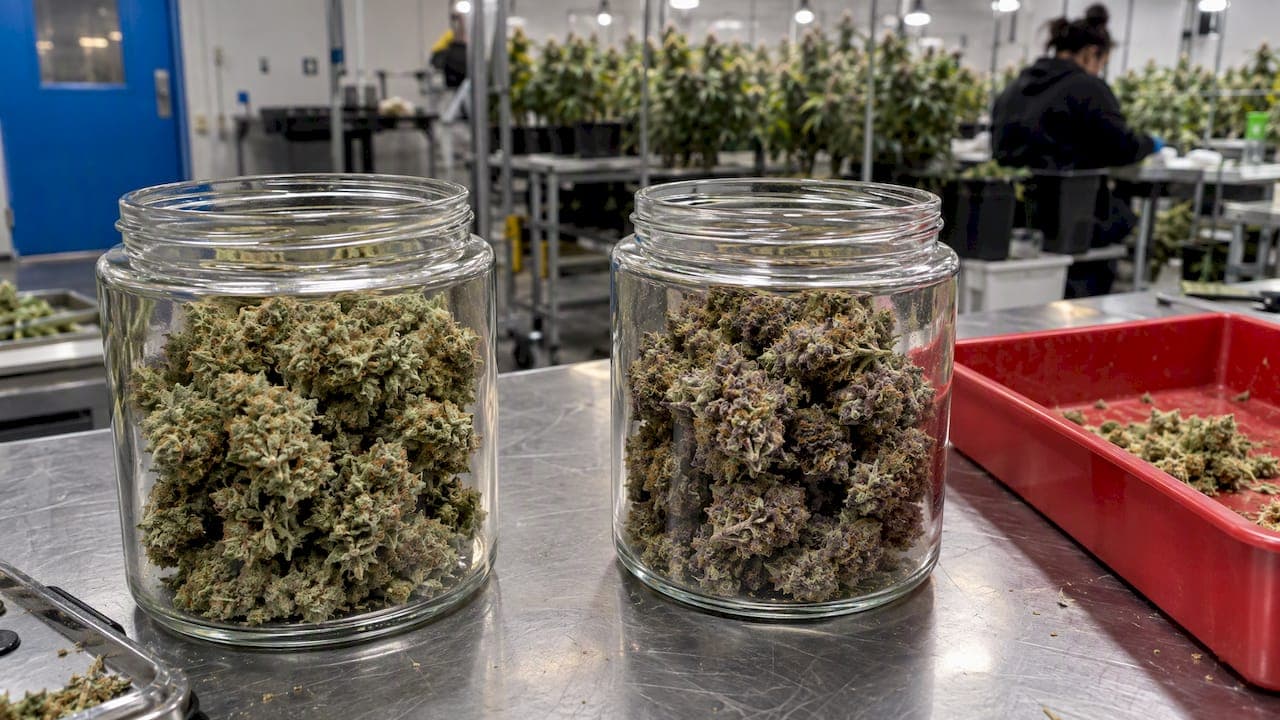
Indica and sativa began as botanical terms for how a cannabis plant looks and grows. Over time, shops and consumers turned them into a shorthand for effects: indica for relaxing, sativa for energizing. That shorthand is only a loose rule of thumb. The chemistry of the specific batch in your jar, meaning its cannabinoids and terpenes, says far more about how it will feel than the label on the front.
Below we cover where the terms came from, what the research says, how hybrids fit in, and a practical way to choose flower using a lab report instead of a label.
TL;DR
- Indica and sativa describe plant structure and ancestry. Indica plants are shorter and bushier, sativa plants taller and leaner.
- The popular idea that indica relaxes and sativa energizes holds only loosely. Researchers say terpene and cannabinoid content is the better guide.
- Most flower on the market today is a hybrid after decades of cross-breeding, so a label alone tells you little.
- Read the batch Certificate of Analysis (COA): total THC and the terpene panel predict your experience better than "indica" or "sativa."
- Use the label as a starting point, then confirm with lab data and your own notes.
Table of Contents
- Where the terms come from
- Do indica and sativa really feel different?
- Where hybrids fit in
- What actually shapes the effect: cannabinoids and terpenes
- Why the same strain can smell and feel different
- A practical way to choose: read the COA
- Our perspective: labels are a conversation starter, the lab report is the answer
- A note on hemp flower and total THC
- Choosing flower from Cali Farms
- Common questions about indica, sativa and hybrids
- Sources
Where the terms come from
The two names point to plant types. According to WebMD, indica is a shorter plant with broader leaves and a woody stalk, while sativa is tall with thin leaves and grows more quickly. Growers tell them apart on sight long before anyone smokes anything.
That is the key point. The words describe a plant in a field or grow room. They were never designed to describe what happens in your body after you inhale.
| Trait | Indica (traditional description) | Sativa (traditional description) |
|---|---|---|
| Height | Short, stocky | Tall, lanky |
| Leaves | Broad | Narrow, thin |
| Stalk | Woody | Fibrous |
| Popular reputation | Relaxing, calming, "body" feel | Uplifting, energizing, "head" feel |
| Reliable predictor of effects? | Only loosely | Only loosely |
The last row is where most articles stop short, so let's go further.
Do indica and sativa really feel different?
The short answer: sometimes, but not reliably, and not because of the label itself.
A 2023 study followed 101 regular cannabis users over two weeks and asked them to report how they felt within 30 minutes of smoking. Cultivars labeled indica were associated with more low-arousal effects, such as feeling sluggish or slow. So the folk wisdom is not pure myth. But the researchers also stressed that the scientific classification of cannabis has long struggled to separate indica from sativa, and the study was a preliminary investigation, not a final word.
Cannabinoid researcher Ethan Russo goes further. In an interview published in Cannabis and Cannabinoid Research, he argues that sorting cannabis into indica and sativa is a futile exercise and says consumers are better served by complete chemical profiles of cannabinoids and terpenes. National Geographic's reporting reaches a similar conclusion, noting that science suggests the labels do not reflect a real difference in effect.
There is also a reason the labels fail in practice. A German analysis of cannabis chemovars points out that categorizing cultivars as sativa, indica or hybrid does not allow enough differentiation between the many varieties on the market. Decades of crossing one line with another have blurred the original types. Two jars both marked "indica" can have very different chemical fingerprints.

Where hybrids fit in
A hybrid is a cross between indica-leaning and sativa-leaning parents. Because crossing has been so common, nearly everything you see on a menu is some kind of hybrid, whatever the front of the package says. Labels like "indica-dominant" or "sativa-dominant" describe which side a breeder believes leans heavier in the family tree, and they are marketing shorthand rather than a measurement.
What that means for you:
- A "sativa" jar may feel calming, and an "indica" jar may feel bright and talkative.
- Strain names are not guarantees either. The same named cultivar can differ between growers, and even between harvests from one grower.
- Dose, tolerance, setting, and what you ate that day all change the experience.
What actually shapes the effect: cannabinoids and terpenes
Two things in the lab report do most of the work.
Total THC
The CDC explains that THC is the psychoactive compound in cannabis and that it alters memory, attention and decision-making. In its cannabis FAQ, it also warns that heavy use can lead to anxiety, panic and paranoia. Those risks depend on how much you take, not on whether the plant is called indica or sativa.
On flower, look at total THC, which combines THC with THCA, the acidic form that converts to THC when heated. Smoking or vaporizing flower activates THCA, so the THCA number matters. A product that advertises only the small amount of already-active THC can understate how strong it will feel. We walk through the math in our guide to what cannabinoid and terpene panels tell you.
Terpenes
Terpenes are the aromatic compounds that give flower its smell and flavor. Cannabis Evidence, a clinician resource, notes that terpenes may influence the intoxicating effects of cannabinoids in whole-plant products, though research is still developing. Commonly discussed examples:
- Myrcene: earthy, musky, often associated with a heavier, calmer feel.
- Limonene: citrus, often linked with a brighter mood.
- Caryophyllene: peppery and spicy.
- Pinene: piney and sharp.
- Terpinolene: fresh, herbal and floral.
Treat these associations as tendencies, not promises. The 2023 study above examined several of these terpenes alongside the labels, and it is exactly this kind of work that suggests terpene content may explain more than the indica or sativa tag does. For a deeper look at aroma and flavor, see our hemp flower terpene guide.
Why the same strain can smell and feel different
Genetics set the ceiling, but growing, drying and curing decide how much of the plant's potential reaches the jar. Terpenes are volatile and fragile. A study on cultivar-specific drying examined how drying conditions change cannabinoid and terpene content in cannabis flower, and noted that few studies had looked at the question before it.

This is one reason we care about the whole process. A strain name tells you the lineage. It does not tell you whether the flower was grown, dried and stored in a way that kept its aroma intact.
A practical way to choose: read the COA
If you want to know what a batch will likely do, the best document is the Certificate of Analysis for that specific batch. A good COA from an independent lab shows total THC, other cannabinoids and a terpene breakdown. State-published examples, such as this Connecticut lab report, show how total THC and cannabinoid results are laid out for a single product.
Here is a simple routine:
- Find the batch COA. It should match the batch number on your package, not a generic strain sheet.
- Check total THC. Start low if you are new or returning after a break.
- Scan the top three terpenes. Warm, earthy, sedating-leaning profiles often suit evenings. Citrus, pine or herbal profiles often suit daytime, but your own response is the real test.
- Look at the safety panels. Contaminant testing matters as much as potency.
- Keep notes. Write down the batch, the amount, and how you felt after 30 to 60 minutes. Patterns appear quickly.
We explain each section in our guides on how to read a hemp certificate of analysis and how to read a terpene test report. If you want to know why potency figures can differ between labs, read about cannabinoid testing methods.
Our perspective: labels are a conversation starter, the lab report is the answer
At Cali Farms we grow indoor flower in living soil, without plant growth regulators (PGRs), and we aim to protect each strain's authentic terpene profile. We control the process from seed to sale, and every batch is lab-verified with a COA you can read.
That is why we are comfortable saying the indica and sativa debate matters less than it appears. When a customer asks for "something relaxing" or "something uplifting," we think the honest answer starts with the terpene panel and total THC, then moves to flavor and aroma, because those are things we can measure and you can verify. The label can still be a useful way to start the conversation. It just should not end it.
We also think freshness is part of the effect equation. Terpenes fade with poor handling, which is why we use packaging engineered to preserve freshness. A jar that smells vivid when you open it usually has a story worth reading on the COA.
— California
A note on hemp flower and total THC
Many consumers meet this topic through hemp flower. The CDC's guidance says total THC is the number to look for on packaging to understand intoxication potential, and some hemp flower is sold without it. If a product page lists only a small THC figure and no THCA, ask for the COA.
Rules are also shifting. A legal overview from Vicente LLP reports that Congress passed a new federal definition of hemp on November 12, 2025, with a one-year delayed start, moving to a total THC standard that includes THCA. State laws also vary, so check what applies where you live before you buy, and talk to a lawyer if you run a retail business.
Choosing flower from Cali Farms
If you want to put this into practice, start with our Cali Farms Flower Collection. Each product page is built around the information that matters: strain, terpene profile, and batch lab results. Two strains to compare as you learn your preferences are Wedding Cake and Banana Upside Down. Read the terpene panels side by side, note which you prefer, and you will learn more about your own taste than any indica or sativa chart could tell you.
Retailers and distributors can also ask us about wholesale. Our retailer buying guide for smoke shops explains what we look for in a reliable supply, and our guides to premium hemp flower, small-batch flower and indoor vs. outdoor hemp flower go deeper on quality.

Common questions about indica, sativa and hybrids
Is indica a downer and sativa an upper?
That is the common rule of thumb, and some people do report it. Research is mixed, though. A 2023 study of 101 regular users linked indica-labeled cultivars to more low-arousal effects, but its authors framed the finding as preliminary and pointed to terpene content as a likely driver. Check the terpene panel and start with a small amount.
Does sativa make you hornier than indica?
There is no scientific basis for that claim. THC affects memory, attention and decision-making, and the CDC notes that heavy use can cause anxiety or paranoia. Any effect on mood or desire depends on dose, setting and the individual, not on the plant label.
What is a hybrid?
A hybrid is a cross between indica-leaning and sativa-leaning parents. Because of decades of breeding, most flower today falls here. A "sativa-dominant" or "indica-dominant" tag describes a breeder's view of the lineage, not a measured result.
Which should I pick for sleep or for daytime?
Don't rely on the label. Look at the batch COA, and favor profiles you have noticed work for you in the past. If you are using cannabis to manage a health issue such as chronic pain, insomnia or anxiety, talk to your doctor first, particularly if you take other medications.
Is it legal to buy cannabis or hemp flower online?
It depends on the product and your state, and federal hemp rules are changing, as explained above. Confirm your local law before ordering, and buy only from sellers who publish batch lab results.
Sources
- WebMD: Indica vs. Sativa
- PubMed: An Ecological Examination of Indica Versus Sativa and Primary Terpenes
- PMC: The Cannabis sativa Versus Cannabis indica Debate, Interview with Ethan Russo, MD
- National Geographic: Indica vs. sativa
- Classification of Cannabis Strains Based on their Chemical Fingerprint
- CDC: Cannabis Frequently Asked Questions
- Cannabis Evidence: Cannabis Basics
- PMC: Cultivar-Specific Drying Approaches for Medicinal Cannabis
- Connecticut eLicense: example cannabis lab report
- Vicente LLP: 2026 Federal Hemp Ban overview