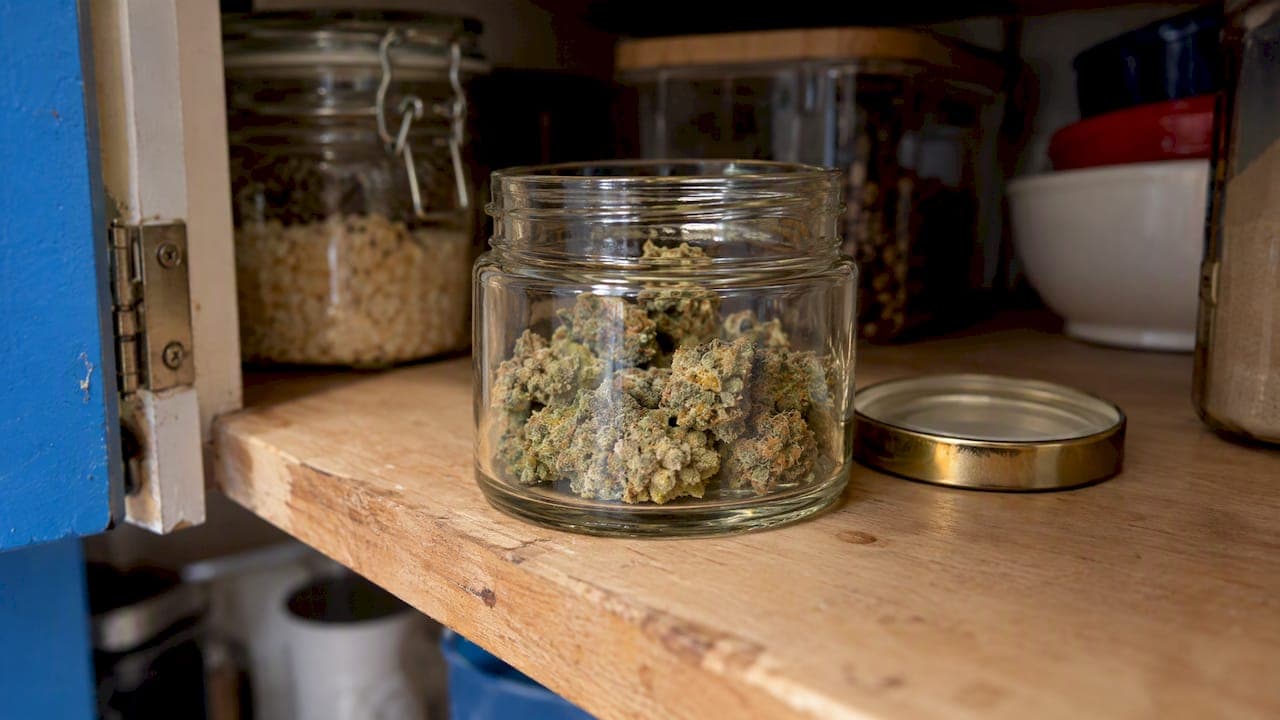
Properly stored cannabis flower stays at its best for roughly 6 months to a year. After that, potency and flavor fade noticeably, but old flower is not automatically unsafe. Mold is the real dividing line between "past its prime" and "throw it out." Below you will find what changes as flower ages, how to spot trouble, what the rules and labels say, and how to store it so it lasts.
TL;DR
- Well-stored flower stays good for about 6 to 12 months. Past that, aroma, flavor and potency decline, though it can remain smokable.
- Light, heat, oxygen and moisture are what age flower. Control those four and you control shelf life.
- Dry, flavorless flower is mostly a quality problem. Visible fuzz, a musty smell or damp, spongy buds are a safety problem. Discard those.
- Several states cap expiration dates at one year from harvest or less, so a package date tells you something real.
- Store flower in an airtight, opaque or dark container in a cool, dry place, and buy amounts you will finish in a few months.
Table of Contents
- How long does cannabis flower really last?
- What happens to flower as it ages
- When weed goes bad: the signs
- Can you smoke three-year-old weed?
- How to store cannabis flower
- Use dates and lab data to judge freshness
- Why flower quality at the start sets shelf life
- Our perspective on freshness
- Fresh flower, straight from the grower
- Quick rules to remember
- FAQ
- Sources
How long does cannabis flower really last?
There is no single expiration date for weed. Flower is a dried plant product, and it slowly loses quality rather than switching from good to bad on a set day. That is why guides give ranges, and why the answer depends on how you keep it.
A useful way to think about it is in three stages:
| Age (stored well) | What to expect |
|---|---|
| 0 to 6 months | Peak aroma, flavor and potency. Buds feel slightly springy and smell like the strain. |
| 6 to 12 months | Still enjoyable. Terpenes (the aroma compounds) start to fade and the smoke gets flatter. |
| 12 months and beyond | Noticeably weaker and harsher. Safe only if there is no mold and the buds have not been damp. |
The 6 to 12 month window is the common guidance, and it matches how regulators treat the product. Ohio requires an expiration date no more than one calendar year from harvest. New Jersey sets a maximum of six months from manufacture or cultivation for usable cannabis. Those are legal ceilings for licensed products, not predictions of when flower becomes dangerous, but they show how conservatively the industry thinks about freshness.
What happens to flower as it ages
Degradation is a natural process that light, heat, air and moisture speed up. Two things happen at once.
Terpenes fade. These volatile compounds carry the smell and taste. Once they evaporate or break down, a loud, fruity strain turns into something that smells like generic dried grass. This is usually the first thing you notice.
THC declines. THC slowly converts into CBN, which is why very old flower tends to feel heavier and less bright. Research cited by Healthline estimates cannabis loses roughly 16% of its THC after one year and 26% after two. Nevada's cannabis regulator, in a shelf-life bulletin, cites THC degradation of about 10% in a year and limits shelf-life extensions to one year. The bulletin says this lines up with pharmaceutical practice, where shelf life ends when 10% of the active ingredient has degraded.

Those numbers differ because storage differs. The takeaway is the same: potency loss is gradual, not a cliff, and it is the flavor that goes first.
When weed goes bad: the signs
Stale and spoiled are different problems. Check in this order.
Signs of mold (throw it out)
Mold can show up as fuzzy white, gray or black patches and a musty smell. White fuzz that looks like cobwebs on a bud is the classic warning. Tiny glittering trichomes can look like mold at a glance, so look closely: trichomes are crystalline and sit on the surface, while mold is fibrous and spreads.

Old flower that is simply dry is generally not dangerous, while moldy or contaminated product is a distinct hazard. If you are unsure, do not smoke it. This matters most for anyone with asthma, a weakened immune system or other health conditions: if that is you, discard any flower you have doubts about and talk to your doctor about what is safe for you.
Signs of age (quality loss only)
- A hay-like smell instead of the strain's aroma
- Crumbly, dusty texture
- A harsh, scratchy taste
- Buds that fall apart at a touch
The snap test
Sound tells you about moisture. Properly dried and cured flower should audibly snap when broken. Old, brittle flower sounds crackly or crumbles to powder. Flower that is too wet is hard to pull apart and makes no sound at all. Damp buds are the ones most likely to grow mold, so treat that last result as a warning.
For a longer checklist focused on the flower we grow, see our guide on how to tell if hemp flower is fresh.
Can you smoke three-year-old weed?
If it has no mold, no musty odor and was never stored damp, it is usually not dangerous, just disappointing. Expect a weak, harsh smoke with little flavor. Some people rehydrate dry flower with a humidity pack for a day or two to improve the feel, but that does not bring back lost terpenes or THC. If the flower looks or smells off in any way, the answer is no.
How to store cannabis flower
Storage is where you gain or lose months. The U.S. Pharmacopeia (USP), which sets quality standards, recommends storing cannabis flower in well-closed containers in a cool place, 8 to 15°C (46 to 59°F), and a dry place, protected from light and moisture. It also specifies that humidity should not exceed 40% average relative humidity at 20°C (68°F).
The four enemies
- Light. Keep flower in the dark. Opaque containers or a closed cupboard work. Clear jars on a windowsill are the worst case.
- Heat. A hot kitchen shelf or a car glovebox speeds degradation. Pick the coolest spot in the house.
- Oxygen. Open the container only as long as you need to. Half-empty jars hold more air, so move leftovers into a smaller container.
- Moisture. Too much invites mold, too little makes flower brittle.
Humidity and water activity
The USP expert panel recommends keeping dried cannabis at a water activity of 0.60 ± 0.05. Below 0.55 the flower over-dries and degrades. Above 0.65 microbial growth becomes a risk. You cannot measure water activity at home without a meter, but the snap test and two-way humidity packs in your container are practical ways to stay in range.
Should you refrigerate it?
A 2022 study in an academic journal found that THC-containing flower should be refrigerated to keep cannabinoid concentrations consistent, while room-temperature storage may suit CBD-dominant flower sold as a finished product. If you refrigerate, use a truly airtight container so moisture does not condense on the buds when you take it out. Let it come to room temperature before opening.
Container quick guide
| Container | Verdict |
|---|---|
| Airtight glass jar kept in the dark | Best everyday choice |
| Sealed, light-blocking, purpose-made flower packaging | Excellent, especially for unopened product |
| Original resealable pouch | Fine for a few weeks |
| Plastic sandwich bag | Poor: lets air in and crushes buds |
One source in Google's results puts plastic bags at only two to four months. We could not tie that figure to an authoritative study, so treat it as a rule of thumb: the point is that bags age flower faster than jars.
Use dates and lab data to judge freshness
Licensed flower often carries dates, and those dates are not uniform. They depend on your state:
- Ohio: expiration no more than one calendar year from harvest, under rule 3796:2-2-02, effective May 2, 2022.
- Nevada: shelf-life extensions limited to one year for all products, per the state's 2024 bulletin.
- New Jersey: usable cannabis gets a maximum of six months from manufacture or cultivation, and dates follow stability testing once it begins.
When shopping, look for the harvest or package date, not just a "best by." A harvest date tells you how long the flower has already aged before you bought it. A batch certificate of analysis (COA) adds the lab's view: cannabinoid levels, terpene content and contaminant screening. If you want to read one with confidence, our guides on how to read a hemp certificate of analysis and reading a hemp flower COA walk through each section.
Rules vary by state and by product type, and hemp flower sold online is not governed by the same dating rules as dispensary cannabis. Check your own state's regulator for what applies where you live.
Why flower quality at the start sets shelf life
Storage can slow aging but cannot fix a weak start. Flower that was dried and cured well, with the right moisture level, keeps better than flower that was rushed. Growing method matters as well: terpene-rich, carefully grown flower has more to lose, so it is worth protecting. If you are weighing growing styles, our comparison of indoor vs. outdoor hemp flower explains the trade-offs, and our piece on hemp flower terpenes shows why aroma is the best early indicator of freshness.
Our perspective on freshness
We grow in living soil without plant growth regulators, and we control the process from seed to sale. That has shaped how we think about shelf life. Freshness is not something you add at the end with a better jar. It starts with how the plant is grown, dried and tested, and it is protected by packaging that keeps light and air out.
We publish terpene profiles and batch COAs because a buyer should be able to see what is in the jar and judge it against what they smell and taste later. When the aroma matches the profile, the flower is doing its job. When it has gone flat, that is your cue to use it up or replace it.
Our practical advice is simple. Buy what you will finish in a few months. Keep it dark, cool and sealed. Trust your nose first and the snap test second. And never talk yourself into smoking anything that looks or smells moldy. For retailers and distributors, the same logic applies at scale: rotate stock by harvest date, and keep inventory in sealed, light-proof storage.
— City
Fresh flower, straight from the grower
If you want flower to start its shelf life in good condition, our Cali Farms Flower Collection offers indoor strains grown in living soil, lab-verified, with batch COAs and packaging designed to preserve freshness. You can also browse individual strains such as Wedding Cake or Durban Poison. Wholesale is available for retailers and distributors.
Quick rules to remember
- Check the harvest or package date before you buy.
- Smell before you open the wallet: it should smell like the strain, not hay.
- Store in an airtight container, away from light and heat.
- Do the snap test every few weeks on long-held flower.
- Discard anything with fuzz, a musty smell or a damp, spongy feel.
FAQ
How long does weed last?
Stored well, flower stays at its best for about 6 to 12 months. It can stay smokable longer, but potency and flavor decline. Research cited by Healthline estimates roughly a 16% THC loss after one year and 26% after two.
How long does weed stay fresh once opened?
Opening itself does not ruin flower, but each exposure to air and light speeds aging. Keep it in a sealed container and aim to finish an opened jar within a few months for the best flavor.
When does weed go bad?
It goes bad when mold appears: fuzzy white, gray or black patches, or a musty smell. A hay-like smell or crumbly texture means it is stale, not necessarily unsafe. If you are unsure, discard it.
Can you smoke a 3-year-old bud?
If it was stored dry and shows no mold or musty odor, it is generally not dangerous, just weak and harsh. If it looks or smells off, or you have a respiratory or immune condition, skip it and ask your doctor.
Should I keep cannabis in the fridge?
A 2022 study found THC-containing flower should be refrigerated to keep cannabinoid levels consistent. Use an airtight container and let it warm to room temperature before opening to avoid condensation.
Sources
- Can Weed Expire? Learn the 7 Signs that Your Cannabis Is No Longer Good
- Does Weed Go Bad? What to Look for and Storage Tips
- How to tell if your cannabis is good
- USP comments on cannabis standards: Definition of Cannabis and Cannabis-Containing Products
- Optimal Storage Conditions of Commercial Cannabis Crops
- Ohio Administrative Code Rule 3796:2-2-02
- Nevada Shelf-life Bulletin for Cannabis Establishments
- New Jersey Packaging and Labeling Guide